You own or manage an independent garden center or plant shop, and you’re creating or updating your website. What do you absolutely need to include? We understand that a totally blank page or template can be intimidating — and even if you hire an expert to do it for you, they still need to understand what your marketing priorities are (unless you hire us, because we already get it!).
The most important thing to remember is the intention of your website —the reason for your website is to get people into your store now. So here are the 10 pages we recommend including on your garden center website:
- Homepage: A good homepage, regardless of industry, should alert the visitor who you are and what you do. So for garden centers, your homepage should include what kind of garden center you are, where you’re located (often missed!), what makes you worth visiting, and what’s going on right now.
You can also include headings for upcoming events, seasonal products, new arrivals, garden inspiration, and current workshops — all linked to other dedicated pages on your website.
- Visit Us / Location page: Do not overlook this page! This one should include your address, hours of operation, directions, parking information, phone number, any applicable seasonal hours, and possible information about accessibility and if you’re pet friendly. A bonus feature? A map showing your location.
The goal of this page is to remove every possible barrier to someone finding you online and taking the time to drive to your store and walk through the gates.
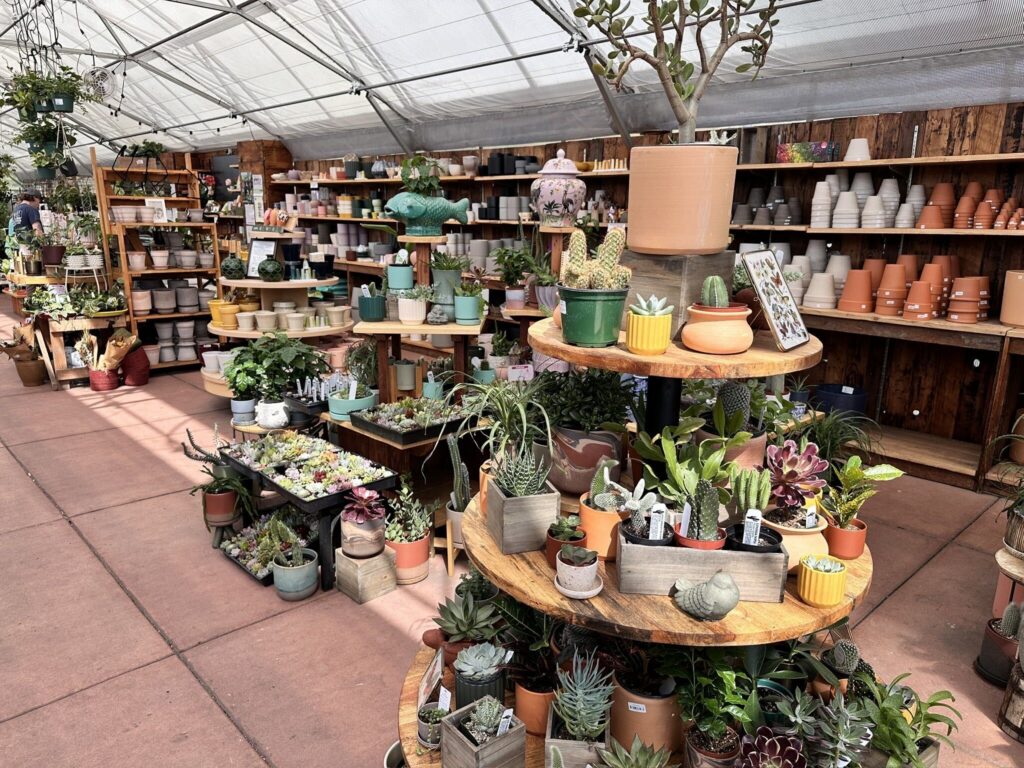
- Products or Shop page: Now, this page is different from a plant grower’s website in that you don’t need to list every plant currently available, but it should offer info about the kinds of plants you do feature. Think annuals, perennials, trees and shrubs, houseplants, edible plants, pottery, garden supplies, and gifts.
Customers should immediately understand what they can expect to find after reading this page.
- Seasonal Highlights page: This page is a fun one because it highlights what is new right now — it’s likely to be the page (along with the Events & Workshops page) that gets updated the most regularly. Include “just arrived,” “what’s blooming now,” “spring is here!”, “fall favorites,” and “holiday decorating.”
As you know, a garden center changes constantly, so your website should reflect that season and what you generally have that’s new and exciting.
- Events & Workshops page: We consistently encourage independent garden centers to make their stores into experiences for their visitors, and this page is where you can really shine! Include workshops, classes, lecture series/guest speakers, children’s events, seasonal celebrations, and special plant sales. Got a pumpkin patch? Tell people! Will the Easter bunny be visiting? Are you hosting a DIY terrarium workshop? Wreath making? You get the idea.
Events not only bring people into your store, but they turn it into a destination.
- Gardening Resources page: This page is potentially a huge SEO opportunity because it can reflect what people search for online. Topics can include what to plant this month, best plants for shade, pet-safe gardening, native plant guides, gardening for your local climate, when to prune, etc. Consider downloadable PDFs for convenience.
This page is all about what is locally relevant to your shoppers — not just “when should I plant tomatoes” but “when should I plant tomatoes in [your city].”
- About Us page: There’s no way around it. Independent garden centers are competing with big box stores, home improvement stores, and large chain stores. What makes you different is what goes on this page, so include your store’s story, its history, what your expertise is, what your connection is to the community, your personality, and anything else that gives you a unique and competitive advantage. Include images of your shop.
Remember, being an independent shop should be a part of your marketing, not something to shy away from.
- Meet the Team page: And speaking of, one of the hugest advantages that independent garden centers offer is a knowledgeable staff, so highlight the owner, manager, greenhouse manager, designers, plant experts, longtime employees, and any staff horticulturalists you have.
Your staff’s expertise is a selling point that a big box store simply does not have.
- Services page: You likely offer more than just products/plants, so be sure to highlight them. Landscape design, delivery, planting services, container design, consultations, or gift services should be added here.
These types of services should be loud and proud on your website rather than buried or, worse, forgotten.
- Contact /Newsletter Sign-Up page: And finally, no website should be without a solid contact page. Not everyone who visits your website is ready to visit in person, so give them another reason/way to connect with you! Newsletter sign up form, text alert (SMS) sign up, follow on social media, and ways to contact the store (email, phone number).
Your website has a very short window to convince someone to pop over and buy from you, so its job is to convince people that you are nearby, you’re open, you have what they need, and you’re worth visiting. Create and regularly update these website pages and you’ve now become successful at one huge aspect of online marketing. Congratulations! We knew you could do it.
And if you’re in need of help —you’re starting a website from scratch, need to update it, or can’t figure out what your site might be missing — schedule a free 15-minute call with Katie to talk about it!